
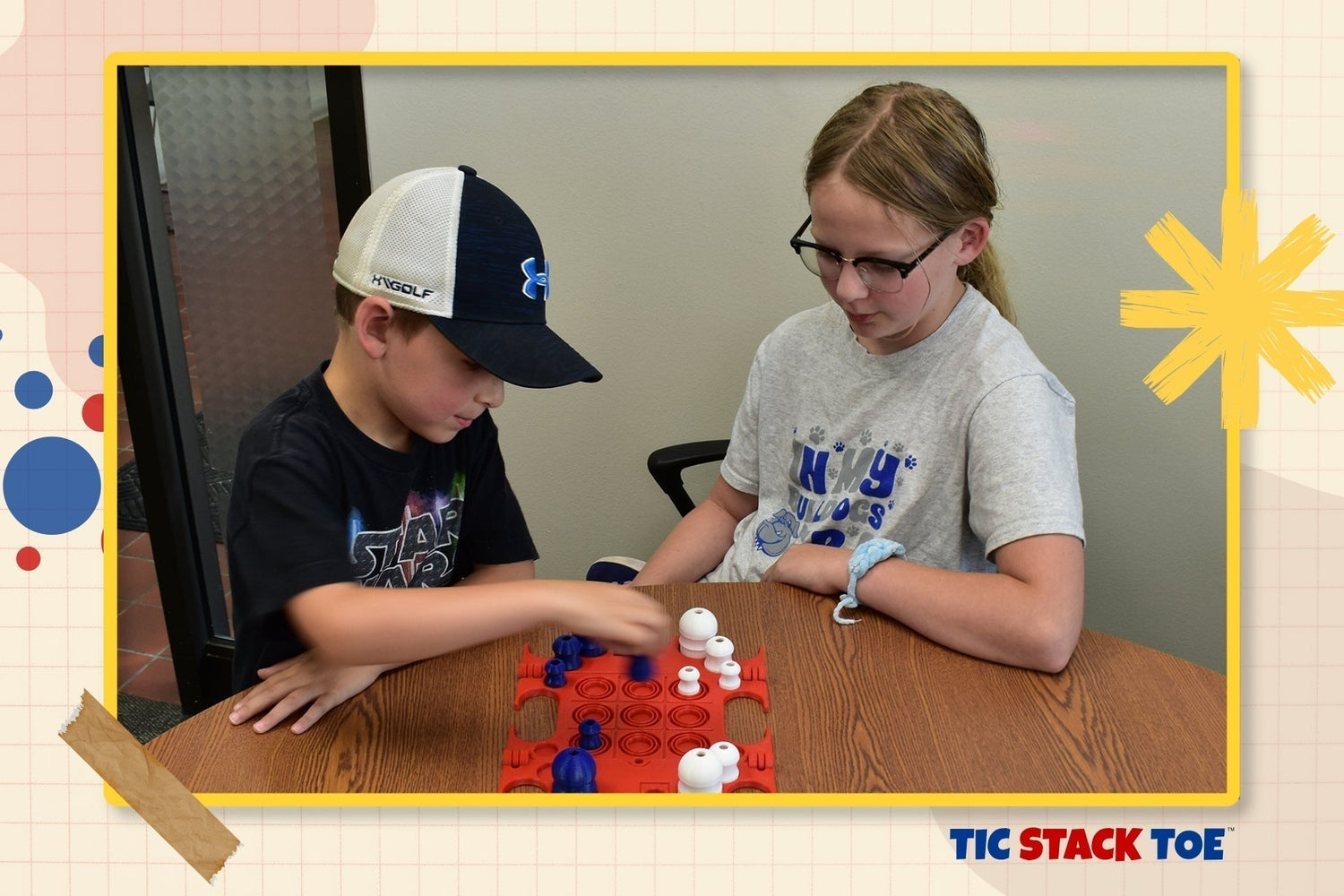
Parents today are always searching for activities that are both fun and beneficial for their children. While many games offer entertainment, the best ones also help kids build important life skills without feeling like a lesson.
Strategy games are a great example.
When children play strategy games, they learn how to think ahead, solve problems, adapt to changing situations, and make decisions based on the information in front of them. The best part? They develop these skills while having fun.
Tic STACK Toe is a perfect example of a game that combines simple gameplay with meaningful learning opportunities. A modern take on Tic-Tac-Toe, it adds a unique stacking mechanic that encourages deeper thinking and strategic decision-making.
Why Strategy Games Matter for Kids
Children learn through experience.
Every time they face a challenge, evaluate options, and make a choice, they're strengthening important cognitive skills that will serve them well throughout life.
Strategy games help children learn how to:
- Think ahead
- Evaluate different options
- Recognize patterns
- Adapt when plans change
- Solve problems creatively
- Learn from mistakes
Unlike activities that simply require memorization, strategy games encourage active thinking. Players must constantly evaluate the board, anticipate future moves, and decide how to respond.
Those same skills are valuable in school, sports, friendships, and everyday life.
Learning Through Play
One reason strategy games are so effective is that kids don't feel like they're learning.
They're focused on winning, improving, and having fun.
Along the way, they're developing valuable skills such as:
Critical Thinking
Children learn to analyze situations before making a move.
Decision-Making
Every turn presents choices. Kids must weigh the pros and cons of different actions.
Problem-Solving
Unexpected situations force players to find new solutions and adjust their plans.
Patience
Good decisions often require slowing down and thinking before acting.
Resilience
Not every game goes according to plan. Learning how to recover from setbacks is an important life skill.
Tic-Tac-Toe Is a Great Start—But Tic STACK Toe Goes Further
Most children learn Tic-Tac-Toe at a young age.
It's simple, recognizable, and easy to teach. But after a while, traditional Tic-Tac-Toe can become predictable.
Experienced players often know exactly how a game will end after only a few moves.
Tic STACK Toe keeps the familiar foundation of Tic-Tac-Toe while introducing new strategic possibilities.
Players still try to get three in a row, but there's a twist.
Larger pieces can be placed over smaller pieces, including pieces already played by an opponent.
This means the board is constantly changing.
A move that seemed safe a few turns ago may suddenly become vulnerable.
A player who appears to be losing may discover a new path to victory.
The added layer of strategy encourages kids to think beyond their next move and consider how the game might evolve several turns later.
How Tic STACK Toe Encourages Strategic Thinking
The stacking mechanic creates opportunities for deeper decision-making throughout every game.
Players must consider questions like:
- Should I use my larger piece now or save it for later?
- Is it better to block my opponent or build my own line?
- Which spaces are most valuable?
- What might my opponent do next?
- How can I protect my current position?
Because the board changes throughout the game, players are constantly evaluating and adjusting their strategy.
These are exactly the types of thinking skills that educators and parents want children to develop.
The Benefits of Screen-Free Problem Solving
Many activities today happen on a screen.
While technology certainly has its place, screen-free games provide a different type of engagement.
Physical games encourage children to:
- Interact face-to-face
- Focus on the task at hand
- Communicate with others
- Engage their hands and minds together
- Practice patience and concentration
Tic STACK Toe offers a screen-free experience that feels engaging and interactive while encouraging thoughtful play.
Building Social Skills Alongside Strategic Skills
The benefits of strategy games extend beyond critical thinking.
Games also help children develop important social and emotional skills.
While playing Tic STACK Toe, kids learn:
Taking Turns
Players must wait for their opportunity and respect the rules of the game.
Friendly Competition
Winning and losing become opportunities to learn and grow.
Communication
Kids naturally discuss strategies, explain moves, and interact with one another.
Confidence
Every successful decision reinforces a child's belief in their own abilities.
These social benefits often become just as valuable as the strategic lessons.
A Game That Grows With Your Child
One challenge with many children's games is that they quickly become too easy.
Tic STACK Toe offers a different experience.
Younger children can enjoy the familiar gameplay of Tic-Tac-Toe, while older children begin to appreciate the deeper strategic possibilities created by stacking.
As players gain experience, they naturally develop new tactics and approaches.
That means the game continues to feel fresh and engaging long after the first few rounds.
Making Learning Fun
Parents don't always need educational workbooks or structured lessons to help children develop important skills.
Sometimes the most effective learning happens through play.
Games that encourage problem-solving, decision-making, and strategic thinking help children build skills they'll use throughout their lives.
Tic STACK Toe takes everything kids already enjoy about Tic-Tac-Toe and adds new layers of strategy, excitement, and replayability.
The result is a screen-free game that's easy to learn, fun to master, and packed with opportunities for kids to strengthen their thinking skills one move at a time.

Leave a comment
This site is protected by hCaptcha and the hCaptcha Privacy Policy and Terms of Service apply.