
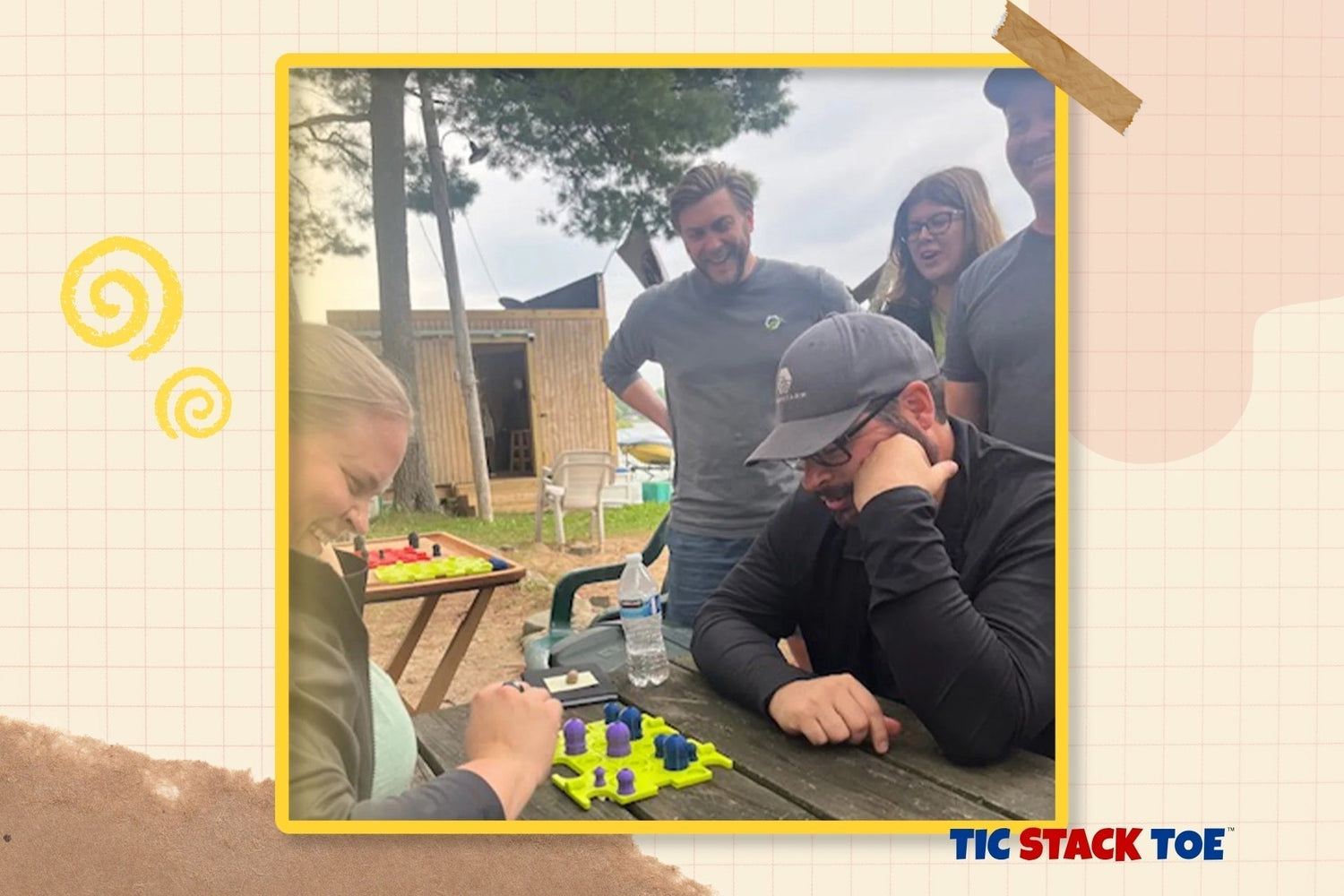
Most families don't struggle to find things to do. They struggle to find things to do together.
Between phones, tablets, streaming services, school activities, and busy schedules, it's easy for everyone to end up in their own corner of the house. That's why many parents are looking for simple activities that encourage real interaction without requiring hours of planning.
The good news is that meaningful family time doesn't have to involve an elaborate game night.
Sometimes a quick game around the kitchen table is all it takes.
The best family games are easy to learn, quick to play, and fun enough that everyone wants another round.
What Makes a Great Family Game?
Not every game works for every family.
The games that get played over and over again usually share a few common characteristics:
- Easy to learn
- Quick to set up
- Fun for multiple age groups
- Short enough to fit into busy schedules
- Competitive without being frustrating
- Easy to replay
When a game checks those boxes, it's much more likely to become a regular part of family life.
Here are ten family-friendly games that help create screen-free moments together.
1. Tic STACK Toe
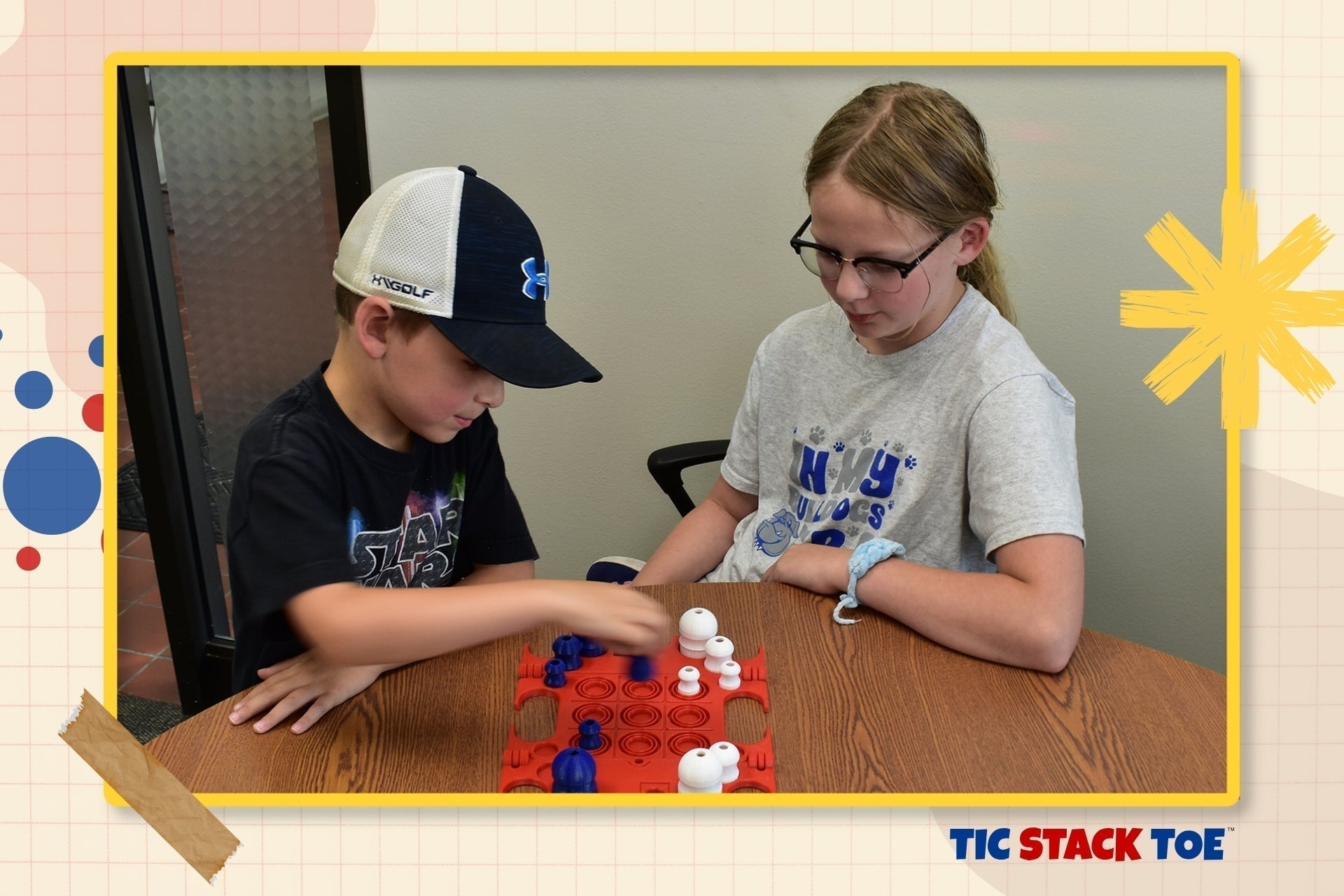
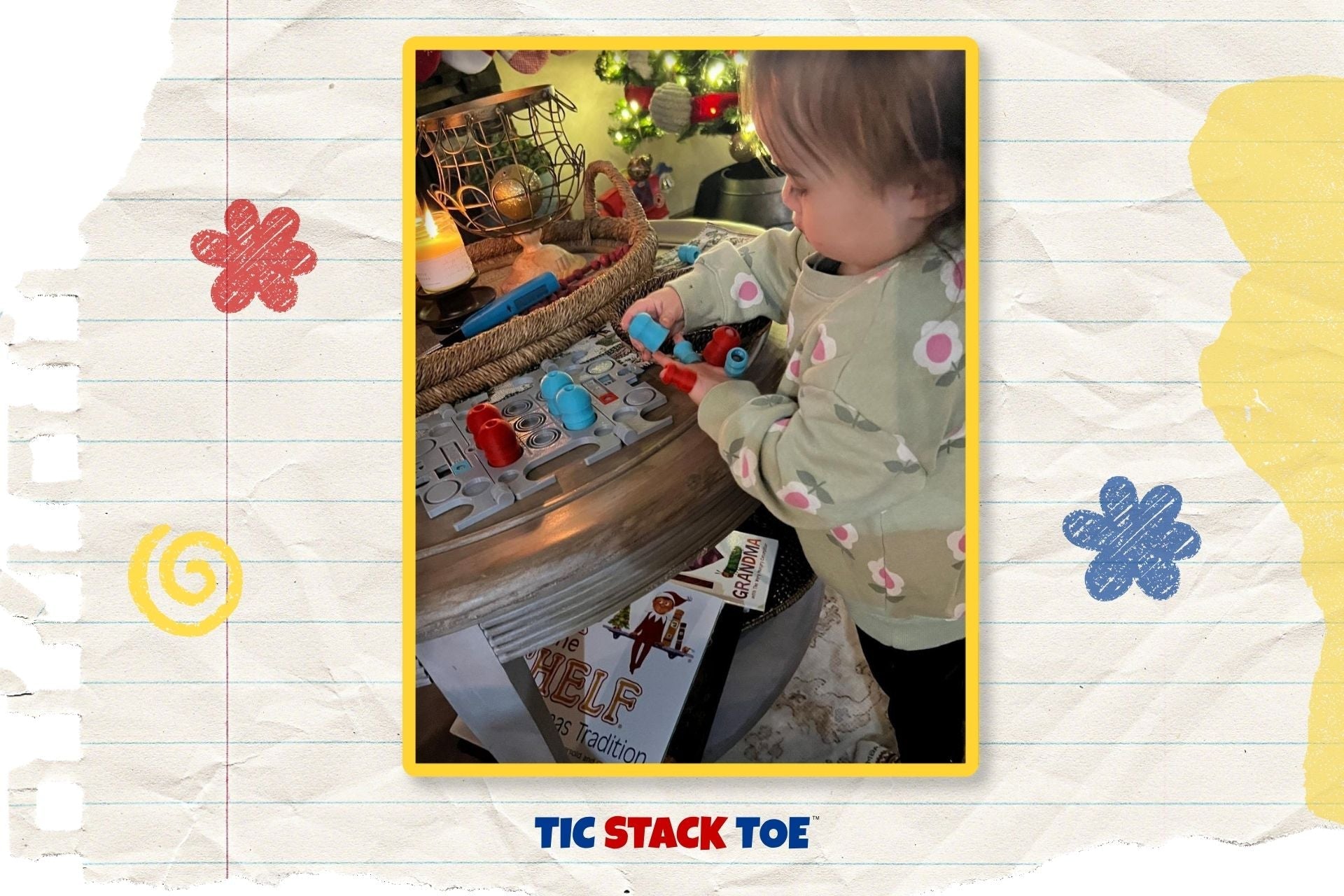
Because it's built on the foundation of Tic-Tac-Toe, most players understand the objective immediately. The stacking mechanic simply adds more excitement, more strategy, and more replayability.
Tic STACK Toe takes the familiar game of Tic-Tac-Toe and adds a clever strategic twist.
Players still try to get three pieces in a row, but larger pieces can be stacked over smaller pieces, creating opportunities to reclaim spaces and change the direction of the game.
Why families love it:
- Quick rounds
- Easy to learn
- Portable design
- Fun for kids and adults
- Encourages strategic thinking
- Familiar gameplay with added depth
2. UNO
UNO remains one of the easiest family games to bring out on short notice.
The rules are simple, games move quickly, and the action cards ensure that every round feels different.
3. Spot It!
This fast-paced matching game challenges players to find matching symbols before everyone else.
It's easy for younger children to learn and often becomes surprisingly competitive among adults.
4. Connect Four
Connect Four combines simple gameplay with strategic decision-making.
Games are short enough for younger players but still engaging enough for older family members.
5. Dominoes
Dominoes have been bringing families together for generations.
The rules are straightforward, and there are countless variations that can keep things interesting.
6. Yahtzee
Rolling dice and chasing combinations creates just enough strategy without becoming overly complicated.
It's a great option for family gatherings.
7. Checkers
Simple, timeless, and easy to learn, Checkers remains one of the best introductory strategy games available.
8. Playing Cards
A single deck of cards can provide dozens of game options, making it one of the most versatile family entertainment tools available.
9. Jenga
Jenga creates suspense, laughter, and plenty of memorable moments.
It's particularly popular with mixed-age groups because everyone understands the objective.
10. Charades
No equipment required.
Charades encourages creativity, teamwork, and plenty of laughs, making it one of the easiest family games to organize.
Why Quick Games Work So Well
One reason many families struggle to maintain game nights is the perception that they require a large time commitment.
In reality, shorter games are often easier to fit into everyday life.
A ten-minute game after dinner is much more realistic than a two-hour board game session on a busy weeknight.
Quick games work well because they:
- Fit into existing routines
- Keep younger children engaged
- Require minimal setup
- Encourage spontaneous play
- Leave players wanting another round
Over time, these small moments often become family traditions.
Creating More Screen-Free Moments
Reducing screen time doesn't mean eliminating technology altogether.
Instead, it's about creating balance.
Many families find success by identifying small windows of time where screens can be replaced with interactive activities.
Some examples include:
- After dinner
- Before bedtime
- During family gatherings
- On rainy afternoons
- While traveling
- During holiday celebrations
The goal isn't perfection. It's simply creating more opportunities for conversation and connection.
Why Familiar Games Often Win
One interesting pattern among successful family games is that they tend to build on concepts people already understand.
That's one reason Tic-Tac-Toe has remained popular for generations. People don't need instructions or tutorials to start playing.
Tic STACK Toe benefits from that same familiarity.
Players immediately understand the goal because it's rooted in a classic game they've likely played before. The stacking mechanic simply adds a new layer of strategy that keeps the experience interesting.
In many ways, it's everything people love about Tic-Tac-Toe, with more opportunities for surprising comebacks and strategic decisions.
Small Games, Lasting Memories
The moments families remember most are rarely the ones they planned down to the minute.
More often, they're the unexpected moments: a rematch after dinner, a game played while waiting for dessert, or a family competition that becomes an inside joke for years.
Games create opportunities for those moments to happen.
Whether your family enjoys Tic STACK Toe, UNO, Charades, or a simple deck of cards, the important thing isn't which game you choose. It's that everyone is participating together.
Because at the end of the day, the best family games aren't really about winning.
They're about spending time with the people who matter most.

Leave a comment
This site is protected by hCaptcha and the hCaptcha Privacy Policy and Terms of Service apply.